Blog

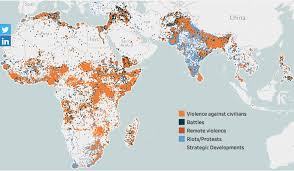
  • Effects of armed conflicts on childhood undernutrition in Africa.

    Effects of armed conflicts on childhood undernutrition in Africa.

    Abstract

    Background: Children who experience poor nutrition during the first 1000 days of life are more vulnerable to illness and death in the near term,as well as to lower work capacity and productivity as adults. These problems motivate research to identify basic and underlyingfactors that influence risks of child malnutrition.

    Methods: A comprehensive literature search was conducted using at the electronic databases (PubMed, Hinari, and Google Scholar database) to locate potential studies. Heterogeneity between studies was checked using Cochrane Q test statistics and I2 test statistics and small-study effects were checked using Egger’s statistical test at a 5% significance level. A random-effects model was employed to estimate the pooled prevalence and associated factors of undernutrition among children age 6-59months in Africa.

    Results: Of a total of 585 articles retrieved from the databases, 12 studies met our inclusion criteria. The pooled prevalence of wasting,s tunting and underweight among conflict affected African countries was 20.25% (95%CI=15.08–25.43),34.18% (95% CI=26.34–42.02), and24.00% (95%CI=16.35–31.65), respectively.The most consistent factors associated with childhood stunting, wasting and under weight in Africa were: low mother’s education, prolonged duration of armed conflict, and place of residence(rural).

    Conclusion: Severity of malnutrition crises will be assisted by a better understanding of the variables associated with child malnutrition, which will improve the effectiveness of development and humanitarian responses. We urge that health planners, policymakers, and the general public prioritize children with acute malnutrition in Africa’s conflict-affected areas.
  • Impact of Early Life under nutrition on Metabolic, Anthropometric and Cognitive profile in Adults.

    Impact of Early Life under nutrition on Metabolic, Anthropometric and Cognitive profile in Adults.

    Abstract

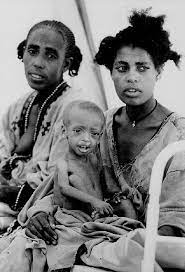
    The 1983-85 Ethiopian Great Famine was one of a severe form of global famine ever documented in Africa as well as the recent history of the world. Although the impact was felt across the country, the epicenter of the famine was in the Northern two provinces Tigray, and Wollo. In common famine scale measures, it was rated as “Great Famine” due to its catastrophic impact and its scale compared to other famines that had ever happened in Ethiopia or Africa.

    Famine exposure during early life adversely affects the two extreme ages of human growth and development; the first 1000 days of life and adolescence. In these two periods, there exist fast growth and development of human body requiring adequate nutritional support; hence, any alteration could bring far-reaching consequences. Global famines such as the “Great Ethiopian Famine of the 1983-85” can be taken as natural exposure to investigate the long-term assaults of early-life nutrition deprivations during adulthood. Hence, this PhD dissertation was aimed at investigating the long-term impact of early-life famine exposure on adulthood metabolic, anthropometric and cognitive consequences. The theory of Developmental Origins of Health and Disease (DOHaD) was used to design studies used in this dissertation. According to this theory, nutritional disruption in early life, particularly in the prenatal, first two years of postnatal life and adolescence period could result in various adverse health outcomes in later life.

    Prior to the conduct of the main research work, we have explored the global evidence through a systematic review approach on the association of famine exposure during early life with non-communicable chronic diseases, anthropometric outcomes and neuropsychiatric conditions in adults.  Furthermore, a qualitative study was conducted among survivors in order to understand the famine context from the victims. Then we have employed a quantitative historical cohort study design to collect data from March 15 to April 30, 2019 in North Wollo Zone, Raya Kobo district, Northeast.

  • Institutional delivery service utilization and associated factors among women in pastoral communities of Ethiopia.

    Institutional delivery service utilization and associated factors among women in pastoral communities of Ethiopia.

    Globally, every year about 303,000 women die due to complications of pregnancy or childbirth [1]. Sub-Saharan Africa alone accounted for roughly two-thirds (196 000) of maternal deaths worldwide [2]. Ethiopia is 4th among the top ten countries in terms maternal death burden with annual number of maternal deaths of 13,000 [1]. Since most maternal deaths and obstetric complications cluster around the time of delivery [3] and cannot be predicted prior, one of the cornerstones to reducing maternal mortality is institutional delivery where births are assisted by skilled health professionals. Skilled attendance during labor, delivery and the early post-partum period could reduce an estimated 13-33% of maternal deaths [4]. However, in Ethiopia, institutional delivery service utilization very low and varies from region to region and place to place [5-7]. The 2016 Ethiopian Demographic and Health Survey (EDHS) showed that the national prevalence of home delivery was 73%, with significant variations across regions ranging from 3% in Addis Ababa to 85% in Afar [5]. Findings from studies conducted in pastoralist districts in Dubti, Afar Region, Ethiopia also indicated 92.6% of births took place at home [8]. Hence, this systematic review and meta-analysis aimed at estimating the pooled prevalence of institutional delivery service utilization and associated factors among women in pastoral communities of Ethiopia, thereby producing real evidence for decision makers and program managers.